Fresh pasta without a machine is one of those kitchen skills that looks harder than it is. You need flour, eggs, a rolling pin, and a stretch of counter you can wipe clean. That's it. Ten minutes of mixing, half an hour of waiting, and a little upper-arm work gets you ribbons that taste nothing like the dried kind — softer, more tender, and far greedier for sauce. What follows are the details that actually decide whether the dough cooperates with you.
Start With the Right Flour
Two flours do most of the work in Italian home kitchens: finely milled 00 flour and semola rimacinata di grano duro, the finely ground durum semolina you'll find in better shops and online. The "00" refers to how finely the grain is milled, not to protein, so two bags with the same number can behave quite differently. Look for a flour intended for pasta, and if the packaging tells you nothing, pick a brand you trust and learn how it feels in your hands.
Semolina brings a golden colour, a faint sweetness and a firmer bite. A blend is the safest place to begin: roughly 70 percent 00 and 30 percent semolina gives you tenderness with some structure. Straight semolina makes a stiffer, more stubborn dough, though it's excellent for water-based shapes like orecchiette. Plain all-purpose flour works in a pinch and rolls out fine, just with a little less silk. Bread flour is best left for bread — its high protein makes a dough that fights the rolling pin and shrinks back on itself.
Egg Ratios That Actually Work
Weigh rather than count. The most reliable starting point is one large egg, about 50 g out of the shell, for every 100 g of flour. From there, adjust to the texture you want.
- Classic: 200 g flour and 2 eggs. Enough for two generous portions of tagliatelle.
- Richer and yellower: 200 g flour, 1 whole egg plus 3 yolks. Lovely for lasagne sheets and wide ribbons.
- Lean and fine: 200 g flour, 2 eggs and a teaspoon of olive oil. The oil helps when you roll very thin.
Salt is optional. Plenty of Italian cooks leave it out of the dough and rely on well-salted cooking water; a small pinch won't hurt either way. If the dough feels dry and crumbly after a few minutes of kneading, wet your hands instead of pouring water in. You'll add less, and you stay in control.
Mixing and Kneading by Hand
Tip the flour onto your counter, make a wide well in the middle, and crack the eggs into it. Beat them gently with a fork, then start drawing flour in from the inner wall. The wall will eventually collapse — that's normal. Scrape everything together with your hands and press it into a rough ball.
Now knead. Push the dough away from you with the heel of your palm, fold the far edge back over itself, give it a quarter turn, and repeat. Ten minutes of this is usually enough. You're looking for dough that is smooth and slightly damp to the touch, springs back slowly when poked, and leaves the counter almost clean. If it sticks, a light dusting of flour; if it feels like a brick, wet hands again. This is the stage where a little patience pays off later, when the dough has to stretch thin without tearing.
Resting Is Not Optional
Wrap the ball tightly in cling film or sit it under an upturned bowl and leave it alone for at least 30 minutes. An hour is better. The gluten that tightened up during kneading relaxes, the moisture spreads evenly through the flour, and the dough goes from springy and resistant to supple and easy to handle. Skip this step and you'll spend the rolling stage wrestling a piece of dough that keeps shrinking.
You can rest it for up to a couple of hours at room temperature, or overnight in the fridge if you want to get ahead — just bring it back to room temperature before rolling, which takes about half an hour. Cold dough rolls badly and tears at the edges.
Rolling by Hand
A long wooden rolling pin and a clean surface are all you need. Lightly dust with 00 flour or semolina, then work through it slowly.
- Flatten the rested dough into a disc with your palm, then begin rolling from the centre outwards, never pressing hard at the very edge.
- Give the sheet a quarter turn after every few strokes. This keeps it roughly round and stops it sticking.
- Keep the pin dusted, not the counter — too much loose flour makes the surface slippery and the pasta tough.
- Roll until the sheet is about 2 mm thick. Hold it up: you should see the shadow of your hand through it, but not daylight.
- Let the sheet dry for five to ten minutes before cutting so the ribbons don't clump together.
For filled pasta, go a shade thinner still. For lasagne, keep it at that 2 mm mark — the sheets will soften in the oven, so there's no need to boil them first.
Cutting and Shaping
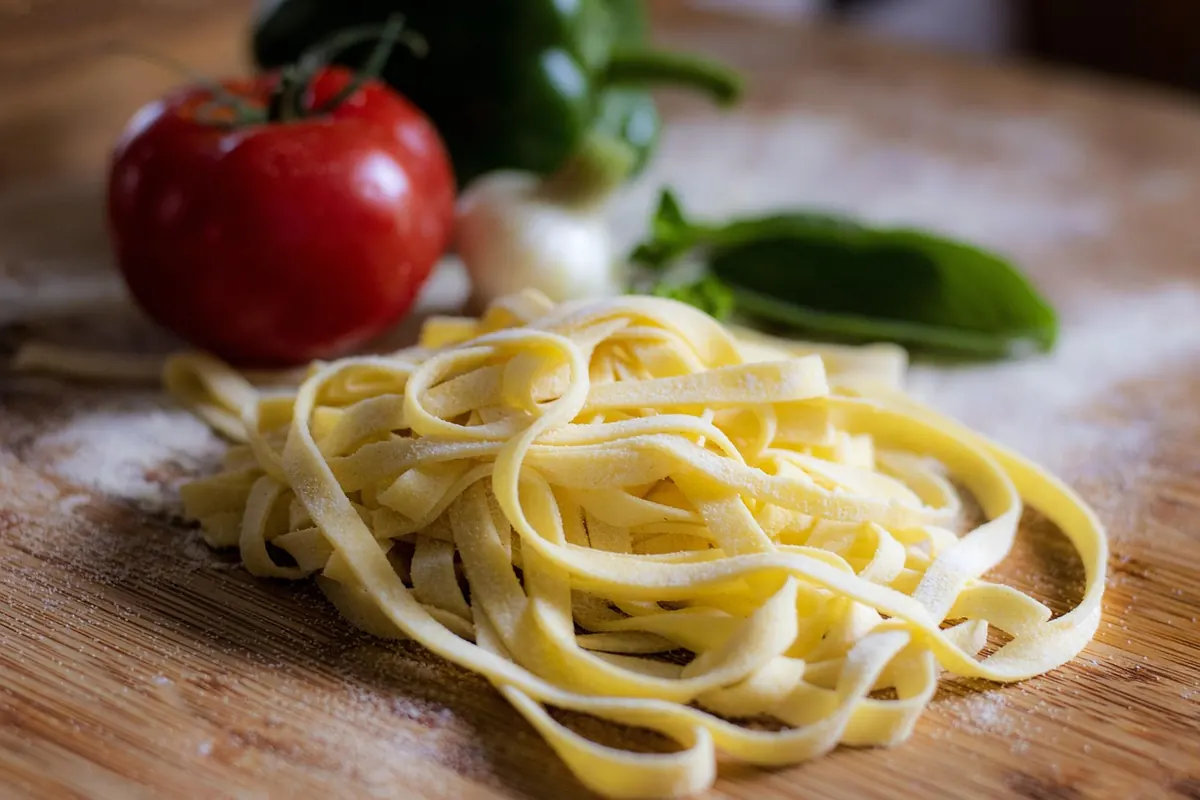
Dust the sheet with semolina, fold it loosely into a flat roll, and cut across with a sharp knife. About 6 mm gives you tagliatelle; 2 cm gives pappardelle. Unfurl each ribbon with your fingers, toss it in a little semolina and twist it into a loose nest. If you'd rather not fold at all, cut the sheet into rough diamonds for maltagliati, which are just as good in a bean soup as they are with a quick tomato sauce.
Cooking Times and Sauce
Use a big pot and plenty of water — around 10 g of salt per litre — and bring it to a rolling boil. Fresh egg pasta cooks in two to four minutes. Taste at two; the moment it loses its raw floury edge and still has a little bite, it's done. Stir in the first thirty seconds so the ribbons don't fuse together.
Scoop out a mug of cooking water before you drain. Finish the pasta in the pan with your sauce over medium heat for thirty seconds, loosening it with that starchy water until it clings. Butter and parmesan, a slow-cooked ragù, or nothing more than good olive oil, garlic and a squeeze of lemon all work beautifully. Eggless semolina doughs need an extra minute or two, but the same rule applies: taste, don't guess.
Your First Batch, Start to Finish
Weigh 200 g of flour, crack in two eggs, knead for ten minutes, rest for one hour, roll it thin, cut tagliatelle, and cook it for two and a half minutes. That's the whole project. Expect the first sheet to be a strange shape and the first ribbons to be uneven; the second batch will already be better, and by the third you'll be rolling by feel rather than by measurement.
Fresh pasta is at its best the day it's made. If you have leftovers, freeze the nests on a tray for an hour, then bag them — cook them straight from frozen, adding a minute to the time. And keep the semolina on hand: a light dusting solves most of the problems you'll meet along the way.
Photo: Mrdidg / Pixabay