Somewhere in a shop in Rome, or in a hill town in Umbria, there is a wall of bottles and a visitor trying to choose one. The labels are handsome. The prices swing from reasonable to alarming. Almost nothing on the shelf says the thing that matters most, which is when the olives were pressed. Choosing well in Italy is not hard once you know what to look at, but the useful clues are rarely the ones people reach for first. Here is what to check, what to ignore, and what to ask before you pay.
Read the Label Like Someone Who Lives Here
The first phrase to find is olio extravergine di oliva. That is a regulated category, not a marketing compliment: the oil comes from olives and is extracted mechanically, without refining. It is the only kind worth buying for dressing, finishing and dipping. Plain olio di oliva is usually a blend of refined and virgin oil. It will fry perfectly well, but it tastes flat and slightly dull poured over tomatoes.
Next, work out who did what. Prodotto in Italia means the oil was made in Italy. Confezionato in Italia means only that it was bottled here, and the olives may have grown in Tunisia, Greece or Spain. Both can be honest, but they are different claims, and the price should reflect that. If a label announces 100% italiano, look for the region, the province or the mill named nearby. A producer proud of the source usually says so twice.
DOP and IGP seals tell you the oil is tied to a defined area and a set of production rules. DOP is the stricter of the two. They are useful signals of place, and no signal at all about freshness, so keep reading past them.
Two more phrases are worth knowing:
- Estratto a freddo or cold extracted: the paste stayed below roughly 27°C during extraction, which preserves aroma. Good producers mention it quietly.
- Frantoio: the mill. A named mill, or a named estate, is usually a better clue than a picture of a sunlit grove.
Ignore the acidity number as a quality score. Anything sold as extra virgin already sits under the legal limit, and the figure on the bottle tells you almost nothing about how the oil tastes this week. Some of the best oils in Italy are not the lowest.
The Harvest Date Beats Every Other Number on the Bottle
Every bottle carries a best-before date, usually somewhere between eighteen months and two years after bottling. Treat it as a shelf-life calculation, not a promise. The number you actually want is the harvest, printed as annata, raccolto, or simply "2024/25" somewhere near the back label.
Olive oil is closer to fruit juice than to wine. It does not improve with age. It is at its most vivid in the first months after pressing, still very good at a year, and tiring by eighteen months. Once you open it, the clock speeds up considerably. Buy the newest harvest on the shelf, even if an older bottle nearby is discounted. A bargain on last season's oil is rarely a bargain.
Italian olives are picked roughly from October through January, depending on latitude and weather, so the current harvest starts appearing in shops from late autumn. If it is spring and the newest bottle you can find was harvested two years ago, that tells you something about how the shop buys and rotates stock.
Regional Styles Change What Is in the Bottle
Italy grows hundreds of olive varieties, and the differences between them are genuinely noticeable in the glass. A bottle from the south is not simply a stronger version of a bottle from the north.
Puglia is the country's olive oil engine, and its oils tend to be generous and assertive, often built on Coratina, with a green bitterness and a peppery catch at the back of the throat. Tuscany is famous for blends of Frantoio, Leccino and Moraiolo: grassy, artichoke-scented, firm and peppery, the classic match for white beans and grilled bread. Liguria, on the steep terraces above the sea, makes gentle oils from Taggiasca olives, pale and sweet with a soft almond finish that suits fish and delicate sauces. Sicily often brings tomato leaf and herb, bright and rounded. Umbria sits in a green, bitter middle ground, and the olive groves around Lake Garda produce some of the mildest oils in the country.
None of these is better than the others. They match different food, and your own taste should decide.
Tasting Words: What "Bitter" and "Pungent" Really Mean
Italian oil labels and shop tastings use a small vocabulary, and two of the words sound like complaints but are not. Amaro (bitter) and piccante (pungent, the pepper that tickles your throat) are signs of fresh, well-made oil rich in the compounds that keep it stable. A bland oil that tastes of nothing is not a refined oil. It is usually an old one.
Look for fruttato (fruity), described as light, medium or intense, and for descriptors like erba, carciofo and mandorla: grass, artichoke, almond. A soft almond note at the end is pleasant in a delicate oil; a stale, papery almond taste means the bottle is past its best. Words you never want to meet are rancido (rancid), muffa (mould), riscaldo (a greasy, heated flavour from bad processing) and avvinato (a vinegary edge).
Practical Habits That Protect a Good Bottle
Buy dark glass or a tin, because light degrades oil quickly, and skip the clear decorative bottle that has been sitting in a sunny window display for months. Buy smaller bottles than you think you need. A 500ml bottle you finish in a few weeks will taste better than a litre that lingers until spring.
At home, keep it in a closed cupboard, away from the stove and away from heat, and screw the cap down properly. Oxygen, light and warmth are the three things that age oil fastest. A pretty bottle beside the hob is the most common way to ruin a good purchase.
Ask for a Taste
Small mills, frantoi and good delicatessens will often open a bottle if you ask politely, especially if you are buying more than one. Taste a drop from a small glass or a plastic cup, warm it in your hand, sip, and draw a little air across your tongue. Bread is fine for dipping but it hides the pepper and the bitterness, so taste the oil first and the bread after.
A Short Checklist Before You Pay
- The words olio extravergine di oliva are on the front.
- The harvest year is printed, and it is the most recent one available.
- The producer, mill or region is named clearly, not just the bottler.
- The bottle is dark and the size suits how fast you cook.
- If you can, taste it: fresh grass and a peppery finish are good signs, flatness and papery almond are not.
One bottle is not enough for every use, either. An intense, peppery oil suits ribollita, beans and steak; a delicate one belongs with mozzarella, grilled fish or a plate of good tomatoes. Buy two small bottles instead of one large one and you will cook better for the next six months.
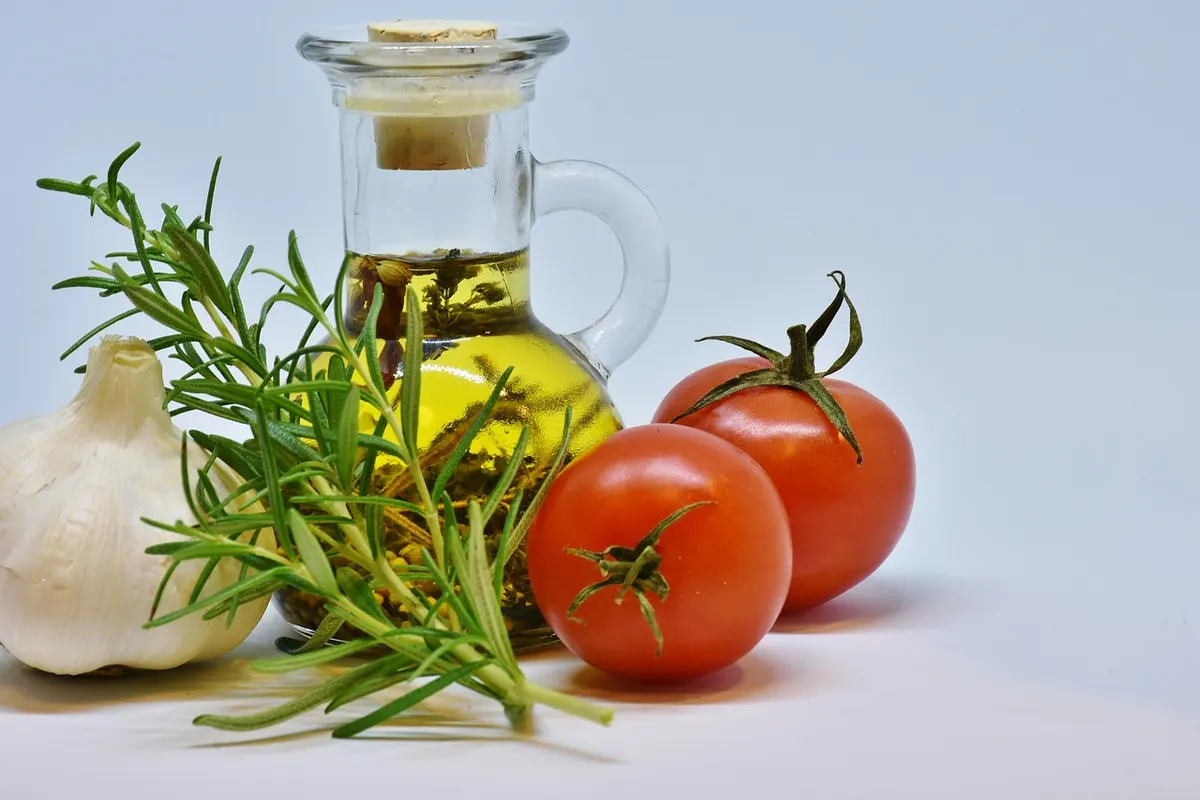
Photo: RitaE / Pixabay