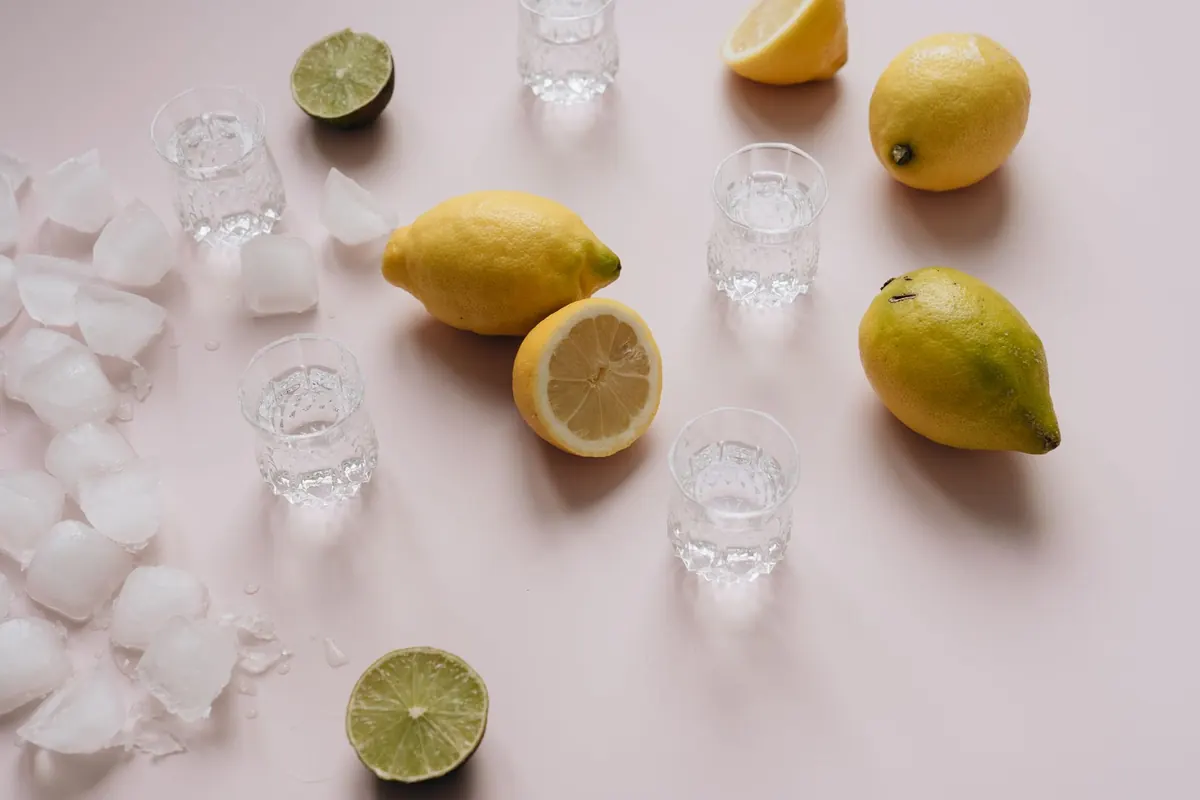
Along the Sicilian coast, lemon granita is less a project than a reflex. The afternoon heat settles in, someone reaches for the freezer, and out comes a shallow tray of pale gold crystals, half slush and half snow. It is sharp enough to wake you up, sweet enough to keep you going back, and cold enough to make the next ten minutes feel bearable. The method is plain: lemons, sugar, water, a freezer, and a fork. What separates a good granita from a merely cold lemon drink is the way you freeze and scrape it.
Granita Is a Texture, Not a Recipe
Sorbet is churned; granita is scraped. That is the useful difference. When you churn a lemon mixture in an ice cream machine, you get a smooth, uniform dessert with tiny air bubbles. When you freeze it still in a tray and break it up with a fork, you get something rougher and more interesting: small, irregular ice crystals suspended in lemon syrup. The best lemon granita is not a solid block, and it is not a smooth sorbet either. It should look like glittering, slightly wet snow, with enough syrup between the crystals to melt on your tongue rather than crunch like a ice cube.
That texture comes from two things: a base with enough sugar to keep the ice from setting like stone, and regular scraping while it freezes. Neither step is difficult, but both reward attention. A granita made with too little sugar and left alone in the freezer will turn into a lemon ice block. A granita stirred once or twice and then forgotten will be patchy, with hard edges and a soft center. The rhythm of scraping is what gives it the right bite.
The Short Shopping List
You need very little, which is part of the appeal. For a batch that serves four to six people in small glasses, start here:
- 4 to 6 lemons, enough to yield about 250 ml of juice, plus a little zest if you want a more aromatic granita
- 180 g sugar, as a starting point
- 500 ml water
- A pinch of fine salt, optional but useful for rounding out the lemon flavor
Use lemons you would be happy to squeeze. Sicilian lemons, when you can find them, tend to have fragrant skins and lively juice, but ordinary supermarket lemons work well too. If you plan to use the zest, choose unwaxed fruit or wash the lemons thoroughly and dry them before zesting. You want the yellow peel only; the white pith underneath is bitter and will make the granita taste harsh.
A note on sugar
Treat 180 g as a starting point, not a rule. Less sugar gives a sharper, icier granita that melts quickly in a warm glass. More sugar gives softer crystals and a rounder flavor, closer to the granita you find in Sicilian bars. Taste the base after it is well chilled and adjust. It should taste a little too sweet and a little too sharp at room temperature, because cold dulls both sweetness and aroma. If it tastes flat, add a small pinch of salt before you reach for more sugar.
Make the Base
The base comes together in minutes. Warm the water and sugar gently in a small saucepan, stirring until the sugar dissolves and the liquid is clear. You do not need a hard boil; heat just enough to dissolve the crystals. Take the pan off the heat. If you are using zest, add a few wide strips now and let them steep for ten minutes, then lift them out. Avoid grating the zest finely at this stage, as tiny pieces can become unpleasant in the frozen granita.
- Juice the lemons and strain the juice to remove seeds and heavy pulp.
- Combine the cooled sugar syrup with the lemon juice and a pinch of salt.
- Taste the mixture. Adjust with a little water if it is too intense, or a little more sugar if it is too sharp.
- Chill the base thoroughly in the refrigerator before freezing. A cold base freezes more evenly and starts forming crystals faster.
- Pour it into a shallow metal or glass container, ideally no more than 3 to 4 cm deep. A wider container is better than a deep one.
Freezing and Scraping
Put the container in the freezer and set a timer for 30 minutes. When you take it out, the edges will have begun to freeze while the center is still liquid. Use a fork to pull the frozen edges toward the middle, breaking up any solid patches as you go. Return the container to the freezer and repeat every 30 minutes or so for the next two to three hours. If your freezer runs very cold, check every 20 minutes; if it is gentle, give it 40.
The granita is ready when it looks like loose, glittering snow with a few softer pockets, not a uniform block. Scrape it lightly one last time and serve it immediately in chilled glasses. If you are not serving it right away, cover the container and keep it in the freezer, then scrape again just before serving.
If you miss the scraping window
It happens. The mixture freezes solid while you are doing something else. Let the container sit on the counter for five or ten minutes, then break the block into chunks with a fork. If the pieces are too hard, pulse them briefly in a food processor, working in short bursts so you do not turn the granita into a liquid. You can also scrape the solid block with a sturdy fork once it has softened slightly at the edges. The result will be a little more uneven, but still good.
Fixing the Common Problems
Most granita troubles are easy to correct before serving. Taste and texture are your guides.
- Too hard or solid: let it soften for a few minutes, then scrape vigorously. Next time, add a little more sugar or check the freezer sooner.
- Too soft or syrupy: return it to the freezer and scrape more often. Make sure the container is shallow; a deep tub freezes unevenly.
- Too sweet: stir in a spoonful of lemon juice and a splash of water, then refreeze and scrape again.
- Too sour: add a small amount of cooled sugar syrup, a spoonful at a time, and taste as you go.
- Bitter: the pith is the likely culprit. Avoid pressing the zest strips and do not include the white layer when peeling.
- Dull flavor: a tiny pinch of salt or a little more lemon zest steeped in the syrup can sharpen it without making it sweeter.
Serving It the Sicilian Way
In Sicily, lemon granita is often breakfast as much as dessert. It arrives with a brioche col tuppo for dipping, or with a spoon and a small glass of water on the side. At home, keep it simple: cold glasses, a lemon twist, perhaps a small spoonful of unsweetened whipped cream on top if you want the granita con panna effect. Do not stir it too much at the table. You want the crystals intact, not a slushy lemonade. If you are serving it after a meal, small portions are enough; the acidity cuts through a rich lunch better than a heavier dessert would.
A Practical Plan for a Hot Day
Make the base in the morning and chill it in the refrigerator. Pour it into a shallow tray before lunch, then scrape it every half hour while you are in and out of the kitchen. By mid-afternoon you have granita. If you need to make it ahead, freeze the base solid overnight, break it into chunks the next day, and pulse it briefly in a food processor just before serving. It keeps for a day or two in the freezer, but it is at its best within a few hours of the final scrape, when the crystals are still bright and loose.
Photo: alleksana / Pexels