A seafood stew rewards a cook who does less than instinct suggests. The temptation is to throw everything into the pot at once and stir. What you get is fish that has collapsed into a broth tasting of everything and nothing. Along the Italian coast the dish goes by many names — brodetto on the Adriatic, zuppa di pesce further south, cacciucco in Livorno — but the logic underneath is shared: make a broth strong enough to eat on its own with a spoon, then cook the seafood in it just long enough to be done. Two stages, one pot. For a beginner, that is the whole secret. Everything else is shopping and timing.
Why the Brodo Comes First
Fish releases liquid as it cooks, and that liquid dilutes whatever is already in the pot. If you build a broth that tastes exactly right and then add fish, you will end up with something thin. So you build it slightly too intense, slightly too salty, and let the seafood bring it back into balance.
The second reason is practical. A brodo made with wine, tomato and a little sweet vegetable can simmer for twenty-five minutes without harm. Fish cannot. Monkfish or cod left to bubble for twenty-five minutes turns to cotton wool. Separating the two jobs means each one gets the time it actually needs.
Use a wide, heavy pot rather than a tall stockpot. Width gives you a single layer of fish, which cooks evenly; depth means the pieces at the bottom crush the pieces above them. A pan about 28 to 30 cm across, with a lid, will serve four people comfortably.
Building the Brodo
Start with a soffritto, but keep it modest. One onion, finely chopped, softened in four or five tablespoons of olive oil over low heat for about ten minutes. Add two cloves of garlic, sliced, for the last minute only — garlic that browns turns bitter and there is no way back from that. A small carrot chopped very fine is a good addition if you want a touch of sweetness to balance the wine; celery is optional and can make the broth taste of the vegetable drawer rather than the sea.
One anchovy fillet, chopped and melted into the oil until it disappears, adds depth that no one will identify as anchovy. It is worth doing.
The wine and the tomato
Pour in a generous glass of dry white wine — something you would drink, not a sweet cooking wine — and let it bubble until the sharp smell of alcohol is gone, roughly three or four minutes. Then add the tomato. A 400 g tin of crushed tomatoes or passata is reliable all year; if it is high summer and you have good ripe tomatoes, peel them, chop them, and use those instead.
Add about 500 ml of water, or better, a light fish stock made from the frames your fishmonger will give you for almost nothing. Simmer uncovered for twenty to twenty-five minutes, until the broth has reduced by roughly a third. Season with salt, black pepper, and a pinch of dried chili. Taste it. It should be a little too strong, a little too savoury. That is correct.
Choosing Fish That Holds Its Shape
For a first attempt, buy only firm fish. Monkfish, cod, hake, grouper, snapper, halibut, or a thick piece of swordfish all work. Ask for one thick fillet or a mix, and have it cut into chunks of about 4 cm — larger than you think. Small pieces overcook in the time it takes to bring the pot back to a simmer.
Skin on is an advantage: it holds the flesh together and adds body to the broth. If your fishmonger has already skinned the fillets, ask them to leave it next time.
- Buy firm white fish for the main body of the stew, about 200 g per person.
- Ask for frames or bones and simmer them for twenty minutes for a quick stock, then strain.
- Keep delicate fish out — sole, plaice fillets and thin flatfish will dissolve. If you want them, add them in the final two minutes.
- Check freshness by smell and touch: it should smell of the sea, not of ammonia, and the flesh should spring back when pressed.
Shellfish: Cook, Remove, Return
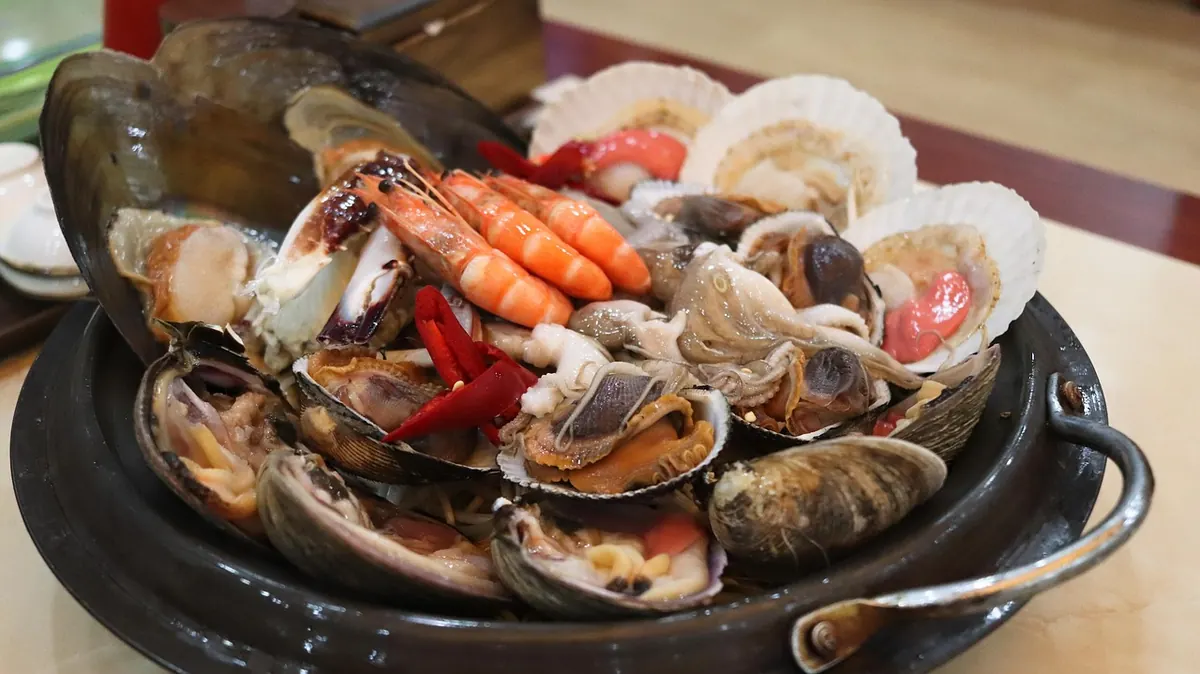
Clams and mussels behave differently from fish, so they get their own moment. Rinse clams and soak them in salted water for an hour or two to encourage them to release grit. Scrub mussels, pull away the beards, and discard any that stay open when tapped sharply on the counter — the same goes for clams that refuse to close.
Add them to the simmering brodo, cover the pot, and give them three to five minutes. As they open, lift them out with a slotted spoon and set them aside in a bowl. This is the one rule that saves the dish: shellfish that stay in the pot while you cook the fish will be rubber by the time you serve. Keep the ones that open, discard the ones that do not.
Shrimp need even less. Peeled or shell-on, they go in during the last three minutes and are done the moment they curl and turn opaque. If you are cooking for someone with a shellfish allergy, skip this section entirely — the brodo works beautifully with fish alone.
Putting It Together
- Warm the pot, make the soffritto, add garlic and anchovy.
- Add the white wine and reduce it until the sharpness is gone.
- Add tomato, stock or water, and season. Simmer for twenty to twenty-five minutes.
- Add clams and mussels, cover, and remove each one as it opens.
- Slide in the firm fish in a single layer. Lower the heat so the surface trembles rather than boils, and cook for six to eight minutes, spooning broth over the top once or twice. Do not stir.
- Add shrimp for the last three minutes, then return the shellfish to the pot to warm through.
- Take the pot off the heat and finish.
- Let it rest for ten minutes before serving. The broth settles, the fish firms, and the bowls are easier to fill.
Finishing With Parsley and Lemon
Off the heat, chop a good handful of flat-leaf parsley with a small clove of garlic and the zest of half a lemon. Scatter it over the top. Squeeze the lemon over the pot — half of it, then taste — and drizzle with raw olive oil, the good bottle, the one you do not cook with. That final drizzle is not decoration; it is what makes the broth taste rounded rather than sharp.
Serve in warm bowls with grilled or toasted bread rubbed with a cut clove of garlic, and put the rest of the lemon on the table. No grated cheese, whatever well-meaning instincts tell you.
Habits That Make It Easier Next Time
Cook the stew the day you buy the fish, or the day after at the latest. Prep everything before the pot goes on — chopped soffritto, cleaned shellfish, cut fish on a plate — because once the brodo is ready the whole dish moves in under fifteen minutes. Write down your timings on the recipe: how long your fish took, how much liquid you added, whether the lemon was too much. Next time you will not need to look. And keep the pot shallow and the heat low; a gentle tremble is what separates a stew from a soup of fish fragments.
Photo: allybally4b / Pixabay